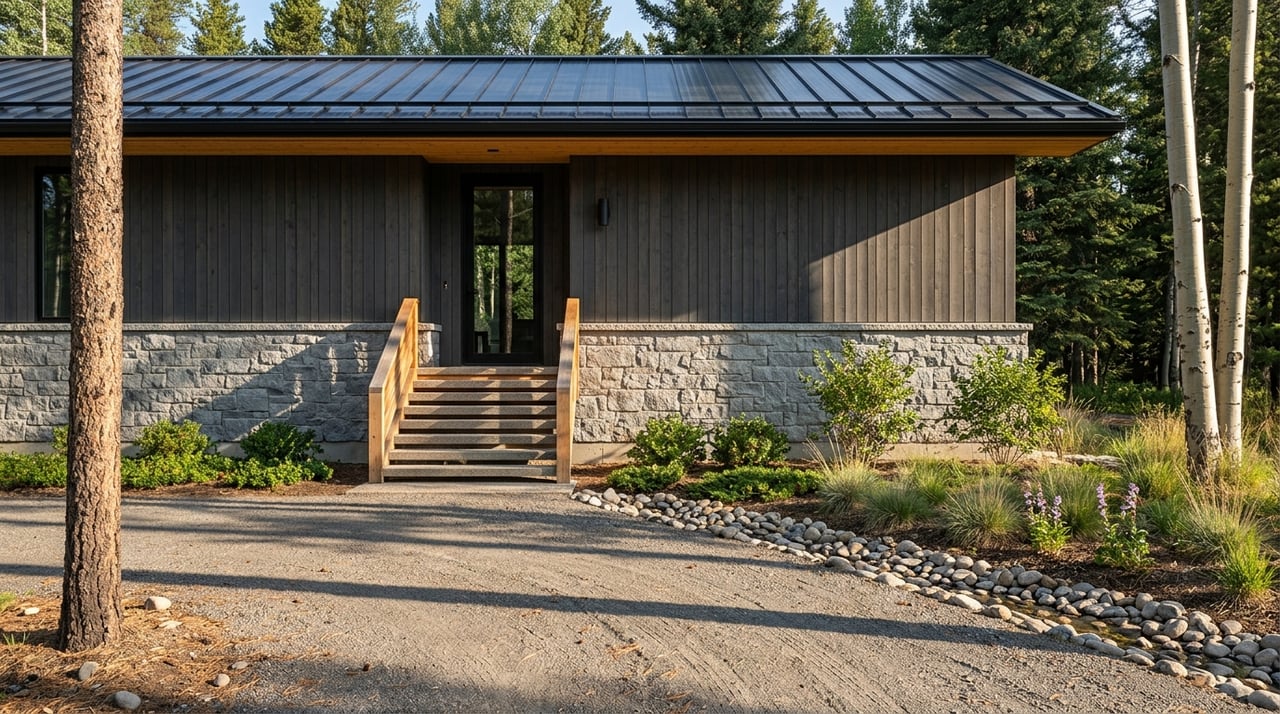
Buying Land Or A Homesite In Tabernash, CO: What To Know
June 25, 2026
June 25, 2026
Thinking about buying land in Tabernash? It can be an exciting move, but a vacant lot is not the same as a ready-to-build homesite. Before you fall in love with the views, you need to know how access, water, sanitation, zoning, and county approvals can affect what you can actually build. This guide walks you through the key questions to ask so you can move forward with more clarity and fewer surprises. Let’s dive in.
Tabernash is in unincorporated Grand County, which means you will usually work with Grand County departments instead of a town office. That matters because county planning, building, sanitation, and road rules all shape whether a parcel is truly build-ready.
Grand County Planning & Zoning manages land use and development in unincorporated areas. The county Building Division processes permits online, and owners are responsible for obtaining required inspections. If you are buying land with plans to build, it helps to think beyond the purchase itself and start looking at the approval path early.
A lot can look perfect on paper and still come with limits that affect your plans. Grand County reviews more than just the house during permit review. Staff also checks zoning, permitted uses, setbacks, height, lighting, landscaping, signs, and other development standards.
That means one of your first steps should be confirming what the parcel allows today, not what you hope it allows later. If you are buying for a full-time home, second home, or future build, you want to know the rules before you close.
Subdivision and development standards in Grand County can require proof of ownership, survey work, and engineering for drainage and utility systems. Lots are also expected to have access to a dedicated street.
In practical terms, that means you should not assume a vacant parcel is ready for construction just because it is legally described as a lot. Survey, title, access, and zoning questions should be answered early so you can understand what work may still be needed.
Water and sanitation are two of the biggest checkpoints when buying land in Tabernash. Grand County requires proof of legal water and proof of legal sanitation during building permit review.
If a parcel is served by a district, the county circulates the permit to that district for approval and tap verification. If the property will rely on a well, an approved well permit must be uploaded with the building permit application.
Grand County lists Tabernash Meadows Water and Sanitation District among the local districts in the area. The district says it serves Pole Creek Valley, Lakeside at Pole Creek Townhomes, Coyote Creek Townhomes, and sewer service to the Old Town of Tabernash.
If your parcel is in or near one of those service areas, ask for clear confirmation of service status, tap availability, and any district requirements tied to construction. This is a key step in understanding whether the lot functions more like a true homesite or more like raw land.
According to the district’s 2025 construction packet, construction plans are reviewed before building permit approval. The district also states that each property has sewer and water stub-outs, a meter assembly must be purchased, and inspections must be completed before backfill.
The district maintains and replaces mains, while property owners are responsible for service lines and meters. For you as a buyer, that means utility service may still come with upfront coordination and cost even when district infrastructure is in place.
If a parcel is not on district service, sanitation may require an onsite wastewater treatment system. Grand County requires an engineered and stamped OWTS design from a Colorado registered professional engineer, along with a notarized declaration of covenants.
The county also notes that a septic permit is not a guarantee that the system will work effectively on the site. That is a strong reason to evaluate septic feasibility before you treat a parcel as ready to build.
If water service is not available through a district, well feasibility should also be checked early. Grand County says water commissioners should be contacted before drilling, and the Colorado Division of Water Resources requires well permits for new groundwater wells. The research also notes that many projects may need an augmentation plan.
Grand County says electricity is available through Mountain Parks Electric and natural gas is available in most parts of the county through Xcel Energy. Even so, availability should still be verified parcel by parcel.
Do not assume utility lines are close enough or simple to connect just because nearby homes have service. A quick confirmation early in your due diligence can help you avoid expensive surprises later.
Access is one of the most important parts of buying a homesite in the mountains. In Grand County, a driveway or access permit must be approved before a building application is submitted. The county also says no certificate of occupancy will be issued without an approved driveway.
That makes access more than a convenience issue. It is part of the path to being able to build and finish the home.
The Road & Bridge Department checks items like culvert size, driveway grade, and ditch conditions. County standards include a maximum 5 percent grade for the first 50 feet from a county-road intersection, a minimum driveway width of 14 feet, on-site snow storage, and a minimum 15-inch culvert unless a site visit determines otherwise.
These details can influence where you place the home, how you design the driveway, and what site work may be required. If the terrain is steep or the access point is tight, those factors deserve attention before closing.
Grand County publishes a snow-plow route for the Meadow Ridge, Pole Creek Valley, and Tabernash area. That is a helpful reminder that winter access is not something to sort out later.
You should verify whether the road is county-maintained, privately maintained, or still only conceptual. If access comes from a state highway or private road, the driveway permit process can differ, and the Colorado Department of Transportation may control highway access.
Grand County has adopted the 2015 building codes with local amendments. The county’s design criteria include snow load based on the county snow-zone map, 115 mph wind speed, a 30-inch frost line, and roof waterproof membrane or ice barrier requirements.
In a mountain market like Tabernash, these standards can shape both your budget and your design choices. A lot that seems straightforward can become more complex once snow, wind, grading, and site conditions are part of the conversation.
Some properties may also be subject to subdivision rules, recorded covenants, or other design-review processes. Grand County subdivision regulations require restrictive covenants and owners-association bylaws to be recorded, and the county notes that some areas may have more detailed design review standards.
If the property is in a community with an HOA, ask for the CC&Rs, architectural rules, and design-review procedures before closing. It is also important to remember that Tabernash Meadows Water and Sanitation District is a separate legal entity from any HOA, so utility district approval and HOA approval are not the same thing.
When you buy land in Tabernash, your best protection is asking the right questions early. The county’s process makes the most useful pre-closing questions pretty clear.
Here are the big ones to cover:
Buying land is often less about the dirt itself and more about the approvals, infrastructure, and timing behind it. In Tabernash, that means understanding how county departments, utility districts, site constraints, and recorded rules work together.
That is where local guidance can save you time and stress. A team that works regularly with homesites, land, and new construction in Grand County can help you ask better questions, connect the dots earlier, and keep the process moving in a practical way.
If you are thinking about buying land or a homesite in Tabernash, working with a team that knows Grand County can make the path a lot clearer. Reach out to THE SIMPLE LIFE COLORADO for straightforward guidance on evaluating lots, understanding local requirements, and finding the right fit for your goals.
Stay up to date on the latest real estate trends.
September 24, 2026
September 17, 2026

September 10, 2026

September 10, 2026
September 3, 2026
August 27, 2026
August 20, 2026
August 13, 2026
August 6, 2026
Partner with us, and let's turn your house-hunting adventure into an exciting journey. Your perfect place is just around the corner, and we're here to help you discover it!