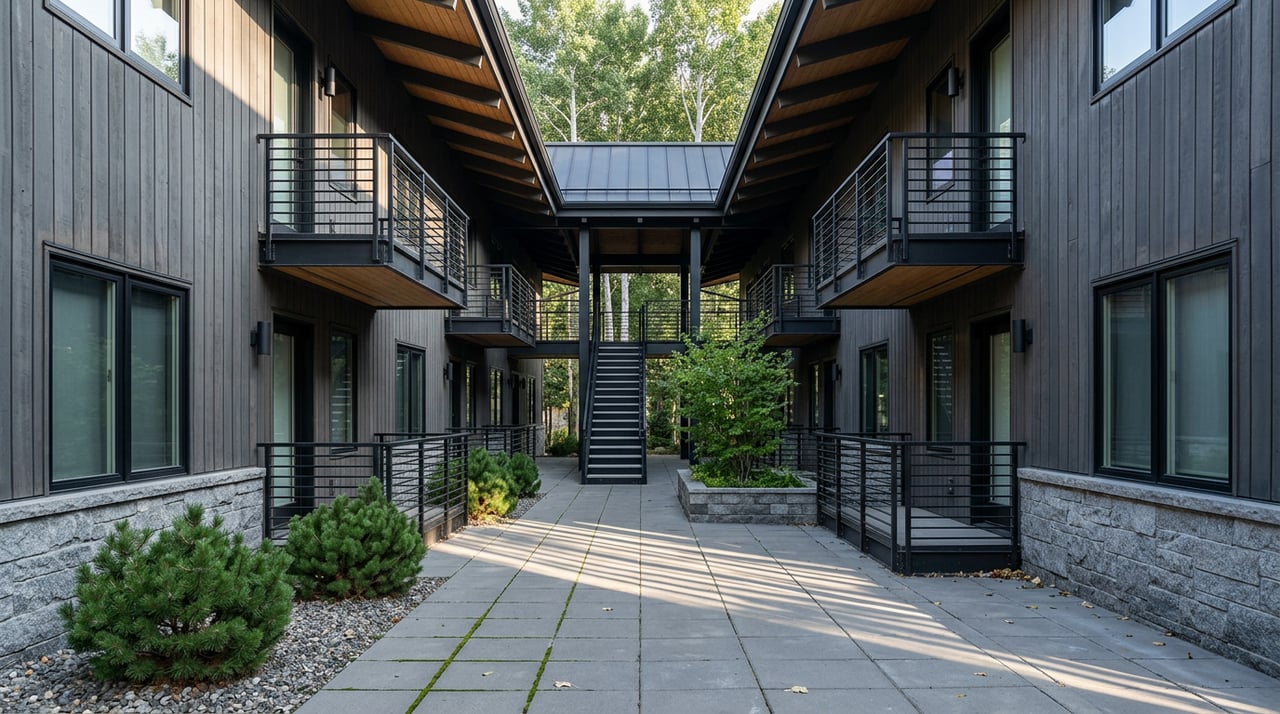
Selling a Winter Park Condo: The License That Doesn't Transfer and the Assessment That Might
August 20, 2026
August 20, 2026
A condo listing near the base area turned up in a recent scan of Winter Park properties with a detail buried in the agent remarks: quarterly HOA dues ran $6,554.15 through 2025, spiked to $6,902 for the first quarter of 2026, and then dropped to $4,241.13 per quarter for the rest of the year. The spike was labeled, plainly, as the final installment of a hot tub assessment. Nothing about the unit changed in that window. No renovation, no new owner, no different square footage. The building's reserve fund simply needed more money than the regular dues covered for a stretch, and once that assessment cleared, the real baseline cost of owning the unit turned out to be a third lower than what the 2025 and early 2026 statements suggested.
That's the part of a Winter Park condo sale that never shows up in the listing price. The number a buyer sees on the portal is the easiest thing about the transaction. What actually determines your net proceeds and your closing date lives in three places most sellers don't think to check until an agent or a title company asks: the reserve study, the HOA status letter, and, if the unit has ever run as a short-term rental, the license itself.
If your unit currently operates as a nightly rental, the most common assumption among sellers is that the buyer simply steps into your spot. They don't. Winter Park's short-term rental registration is issued to an owner, and it does not transfer with a sale. A buyer who wants to keep renting the unit on the exact same schedule you did has to apply for their own license before they can legally list a single night.
That application isn't a formality. The base annual registration fee is $150. Ordinance 605, which the town council adopted to help fund workforce housing in the Fraser Valley, adds a $400 per bedroom annual fee on top of that base charge, a step the town described as a balanced approach for an inventory of roughly 1,200 registered short-term rentals in Winter Park at the time. And as of August 1, 2025, every new or renewing registration also requires a current Fire and Life Safety Inspection completed by East Grand Fire Protection District within the prior twelve months, a requirement added under Ordinance 624.
Put together, a buyer who wants day-one rental income needs the license fee, the per-bedroom fee, and a passed fire inspection lined up before the first guest checks in. None of that happens automatically at closing. The town keeps the current rules and the required forms posted on its Good Neighbor Policy page. Check it before you price a unit around its rental history, not after.
In Winter Park, a short-term rental license belongs to the person who applied for it, not the address it sits on.
If your unit is not currently an STR, this section doesn't apply to your sale. But the next two do, whether you've ever listed a night on Airbnb or not.
Every Colorado HOA and condo association is required to disclose its reserve funding status to owners, and that disclosure is worth more to a seller than the monthly dues figure ever will be. A healthy-looking dues number can sit next to a reserve fund that's badly behind on a roof replacement, a boiler, or, as in the hot tub example above, an amenity nobody budgeted for early enough.
The dues figure tells a buyer what they'll pay this month. The reserve study's percent-funded figure tells them what they might pay next year. A seller who hasn't looked at that number before listing is walking into negotiations blind, because a sharp buyer's agent will ask for it, and a low percentage funded is exactly the kind of finding that turns into a request for a price reduction or a seller credit at the inspection stage.
| What the listing shows | What actually shows up at closing |
|---|---|
| Sale price | Net proceeds after any pending special assessment |
| "Currently rented as an STR" | Buyer must apply for and hold their own license before advertising a single night |
| Monthly HOA dues | Reserve study percent funded, which predicts the next dues increase |
| "HOA transfer fee: TBD" | A statutory cap on that fee, and a strict deadline for the paperwork behind it |
Colorado's Common Interest Ownership Act treats the HOA status letter, sometimes called a resale certificate, as the seller's equivalent of a credit report. It has to disclose unpaid assessments, pending special assessments, current reserve study findings, insurance information, and any pending litigation. The statute caps what an association can charge to prepare it at $150, and it requires the association to furnish it within 14 calendar days of a written request. Miss that window and the association actually forfeits its lien rights for what was owed as of the request date.
That deadline sounds like protection for the seller, and it is, but it cuts both ways on timing. If you wait until you're under contract to ask for the status letter, you're asking a volunteer board or a small management company to turn around a document with real legal weight inside two weeks, during ski season, when half of Grand County's property managers are juggling turnover schedules. Requesting it before you list, not after you're under contract, is the difference between a smooth closing and a delay that spooks a buyer three weeks before their loan is set to fund.
There's a second layer here too. Colorado law gives HOA assessment liens a six-month super-priority window over a first mortgage. In plain terms, unpaid dues or an unpaid special assessment can sit ahead of the mortgage in the payoff order at closing. If your association has an assessment outstanding and you haven't accounted for it, it comes out of your proceeds before anything else does, sale price and all.
None of this changes what your condo is worth. It changes how much of that value actually reaches your account, and how many days it takes to get there.
Does my STR license transfer to the buyer when I sell? No. The registration is issued to you as an individual owner. A buyer who wants to continue renting the unit nightly has to apply for a new license, pay the base fee plus the per-bedroom fee, and provide a current fire and life safety inspection before they can advertise it.
How do I know if my HOA's reserve study is in good shape? Ask for the percent funded figure and compare it against the dollar value of the major projects the study flags as coming due. A study that's several years old, or a percent funded that's dropped noticeably since the last one, is worth asking your agent to factor into pricing before you list rather than after a buyer's inspector finds it.
What if the status letter isn't ready by closing? Request it as early as possible, ideally before you list rather than after you're under contract. The 14-day statutory clock protects you if the association drags its feet, but it doesn't protect your closing date if you only start the request once you're already under a deadline.
If you're weighing whether now is the right time to list a Winter Park condo, or you want a second set of eyes on a reserve study before you price the unit, The Simple Life Colorado has spent years walking Grand County owners through exactly this kind of paperwork. Browse current Winter Park listings, run a number through our home valuation tool, or read our sellers guide for the fuller picture. When you're ready to talk specifics, contact us and we'll help you get the reserve study and status letter moving before they become the thing holding up your closing.
Stay up to date on the latest real estate trends.
October 1, 2026

September 24, 2026
September 17, 2026

September 10, 2026

September 10, 2026

September 3, 2026
August 27, 2026
August 20, 2026
August 13, 2026
Partner with us, and let's turn your house-hunting adventure into an exciting journey. Your perfect place is just around the corner, and we're here to help you discover it!