Fraser's Cheaper Median Isn't a Discount. It's a Different Product.
September 24, 2026
September 24, 2026
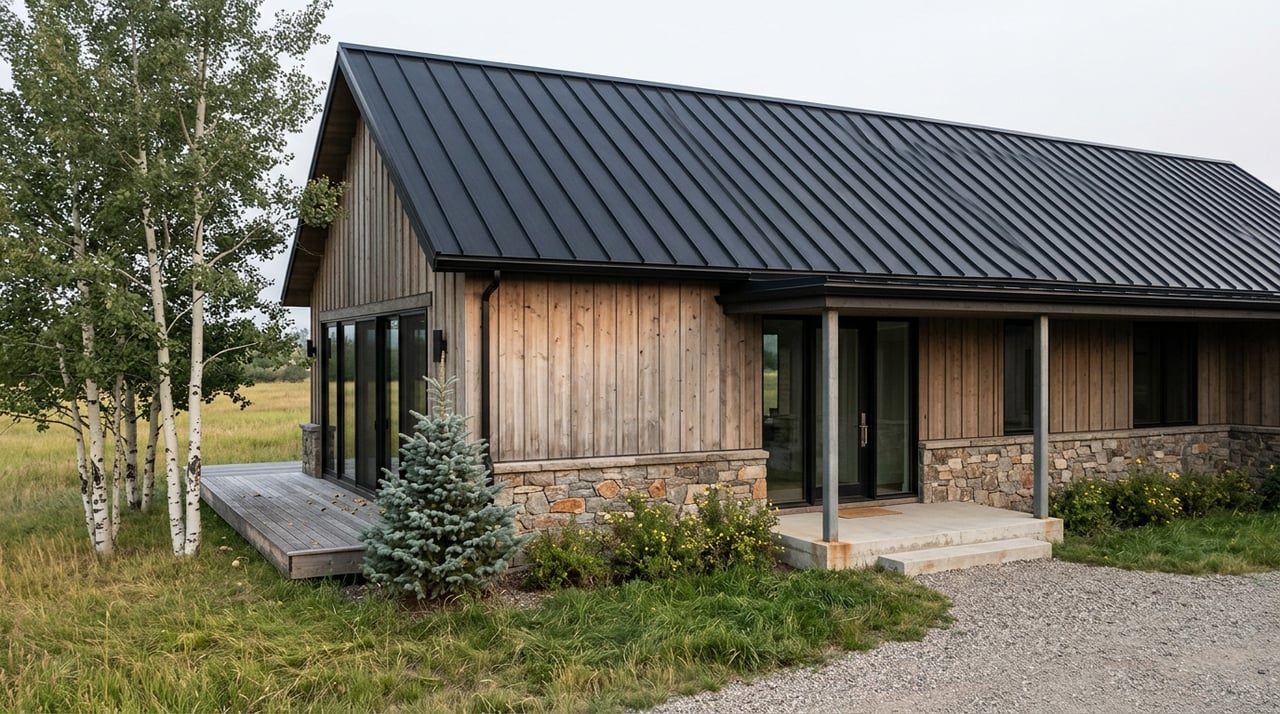
A buyer touring Fraser this spring found a two-bedroom near downtown priced nearly half a million dollars under anything comparable in Winter Park. She wrote an offer the same afternoon. Her agent called two days later with a detail that hadn't come up on the listing sheet: the home carried a deed restriction. To close on it, she'd need to work at least 30 hours a week for an employer in Grand County. She worked remotely for a company in Denver. The house she'd already mentally moved into wasn't for sale to her, no matter what she offered.
That scenario is becoming more common in Fraser, and it's not a fluke of one listing. It's the result of a housing policy the town has been building for years, one that's about to scale up fast. If you're comparing Fraser's price tag to Winter Park's and treating the gap as a straightforward discount, you're missing the mechanism that's actually driving it.
Fraser has run a voluntary deed-restriction program for years, separate from any single development. A homeowner agrees to restrict occupancy to a full-time worker employed in Grand County, and in exchange the town pays cash the owner can use however they want, whether that's a down payment, tuition, or debt payoff. When the program first launched, the town was offering up to $40,000 per house for participation.
What makes this program unusual, and easy to miss if you're not looking for it, is what it doesn't do. It doesn't cap the sale price. It doesn't limit the owner's income. The town isn't trying to freeze appreciation, only to guarantee that whoever lives there is actually part of the local workforce. The Town of Fraser's housing page spells out the tradeoff plainly: sell at fair market value, but the next owner has to qualify the same way you did. The restriction runs with the land. It doesn't expire when you sell.
That's the part buyers don't expect. A restricted home can list at the same price as its unrestricted neighbor, show up in the same search results, and photograph identically. The only difference is who's allowed to live in it, and that difference doesn't show up until title work or a conversation with the listing agent.
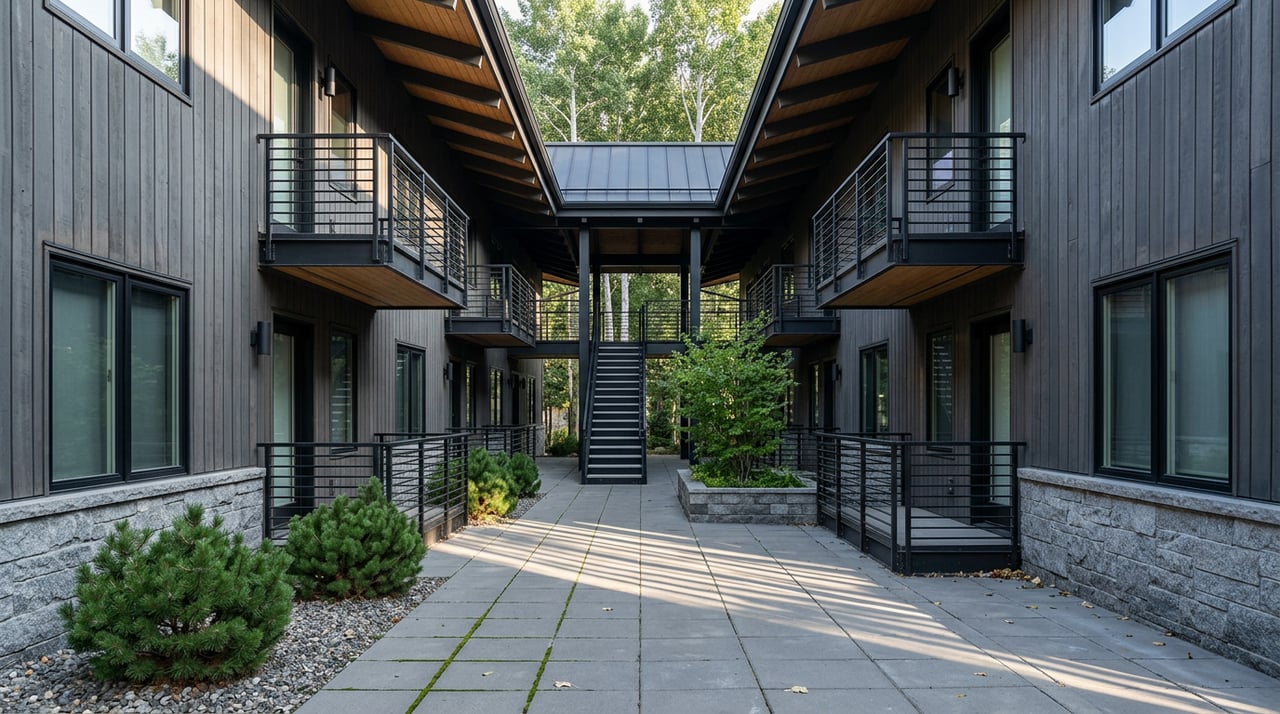
The voluntary program has restricted a handful of individual houses over the years. St. Louis Landing is a different scale entirely. The project, built on an 11.3-acre site the town purchased near St. Louis Creek, will eventually deliver 220 housing units for Grand County residents earning between 30% and 160% of the area's median income, which was $84,558 in 2023. Phase one alone, spread across three buildings the town calls C, D, and E, totals 129 units and is expected to wrap between late 2026 and early 2027.
U.S. Senator Michael Bennet toured the site in January 2026, and the numbers shared during that visit put the full project cost at roughly $75 million, with the Fraser Valley Housing Authority carrying $45 million of it directly. The financing stack reads like a small case study in how affordable housing actually gets built in a resort economy: state grants, Proposition 123 equity financing, Middle-Income Housing Tax Credits, and a $3 million grant the town used to buy the land in the first place, which local officials believe made Fraser one of the first Colorado municipalities to receive grant funding specifically to acquire land for affordable housing rather than developing land it already owned.
Every unit in St. Louis Landing will be deed-restricted in perpetuity. Remote workers won't qualify. None of the units can be converted to short-term rentals. This is 129 units, with another 91 to follow, that will never trade like a normal Fraser home.
St. Louis Landing gets the headlines, but it's not the only lever. Fraser's zoning code now builds deed restrictions into the price of density itself. In the Riverwalk Mixed-Use Overlay, a developer who wants to build above the underlying zoning's unit count has to set aside at least 20% of the units as deed-restricted in perpetuity to earn that density bonus, which can run as high as 60 units per acre. Accessory dwelling units get their own version of the tradeoff: an owner can rent an ADU long-term to a local worker, or license either the ADU or the main house as a short-term rental, but not both at once.
This is why Koselig on Main, the mixed-use building on Highway 40 that's home to Simple Coffee Co. and The Birdie Lounge, has two of its twenty residential units deed-restricted at 80% of area median income. It's a small building, but it's a preview of how the code will keep operating on every infill project that wants density: some fraction of what gets built won't be open-market inventory, by design.
The town's newly adopted comprehensive plan, called Fraser Forward and finalized in early 2026 after 18 months of drafting, treats this as a permanent feature of how Fraser grows, not a temporary response to one project. If you're watching Fraser's new construction pipeline expecting it to behave like an unrestricted market, the code itself says otherwise.
Here's the part that matters if you're cross-shopping Fraser against Winter Park on price. MLS-reported medians don't separate deed-restricted resales from open-market sales. They're blended into the same number. Over the three months ending in May 2026, Fraser's median sale price sat at $869,000, down 20.2% from the same period a year earlier, with only 18 homes sold that month and days on market stretching to 43 from 35 the year before. That's a real and reportable number. It's also a number that includes both products: homes anyone with financing can buy, and homes only a Grand County workforce member can buy.
Realtors surveying the county this spring described the two towns in almost opposite terms. Winter Park was called the region's "luxury heartbeat," with April 2026 sales running around $1.5 million and homes taking roughly three months to sell as premium buyers waited for the right presentation. Fraser, by contrast, was described as feeling "steadier and more practical." That contrast is real, but it's not purely a story about buyer taste. Part of what makes Fraser's numbers steadier is that a growing share of its housing stock was never meant to compete on the open market in the first place. It was built, zoned, or bought back specifically to sit outside it.
None of this means Fraser is a bad place to buy. It means the due diligence looks different than it does in Winter Park or Granby. Before you fall for a number that looks too good, it's worth confirming a few things directly with the listing agent or title company:
| Market-rate home | Voluntary deed-restricted resale | St. Louis Landing unit | |
|---|---|---|---|
| Who can buy or rent | Anyone | Grand County workforce, 30+ hrs/week | Grand County workforce, 30-160% AMI |
| Price or appreciation cap | None | None on price or appreciation | Rent or sale tied to AMI band |
| Short-term rental allowed | Subject to town STR licensing | No | No |
| Restriction transfers at resale | N/A | Yes, in perpetuity | Yes, in perpetuity |
Does a deed restriction mean the home is cheaper than it should be? Not necessarily. Fraser's voluntary program doesn't cap price or appreciation, so a restricted home can sell at full market value. The restriction limits who's eligible to buy it, not what it's worth.
Could this happen in Winter Park too? Winter Park has its own workforce housing conversations underway, but the specific mechanisms in this piece, the voluntary buyback program, St. Louis Landing, and the Riverwalk zoning set-aside, are Fraser policies tied to Fraser parcels.
If I already own a market-rate home in Fraser, does any of this affect me? Only if you choose to participate in the voluntary program or if your property sits in a zone where a neighboring project used a density bonus. It doesn't retroactively restrict homes that were never part of one of these programs.
Fraser's price gap against Winter Park is real, but so is the fact that part of that gap is structural, not incidental. If you're comparing towns on a spreadsheet, it's worth knowing which rows in the "sold" column you could have actually bought. That's the kind of detail that's easy to miss from a listing photo and expensive to miss after you've written an offer.
If you want a second set of eyes on whether a specific Fraser listing carries a restriction before you get attached to it, The Simple Life Colorado works this valley every day and can walk the details with you before you write anything. Contact us and let's look at the fine print together.
Stay up to date on the latest real estate trends.
September 24, 2026
September 17, 2026

September 10, 2026

September 10, 2026
September 3, 2026
August 27, 2026
August 20, 2026
August 13, 2026
August 6, 2026
Partner with us, and let's turn your house-hunting adventure into an exciting journey. Your perfect place is just around the corner, and we're here to help you discover it!